
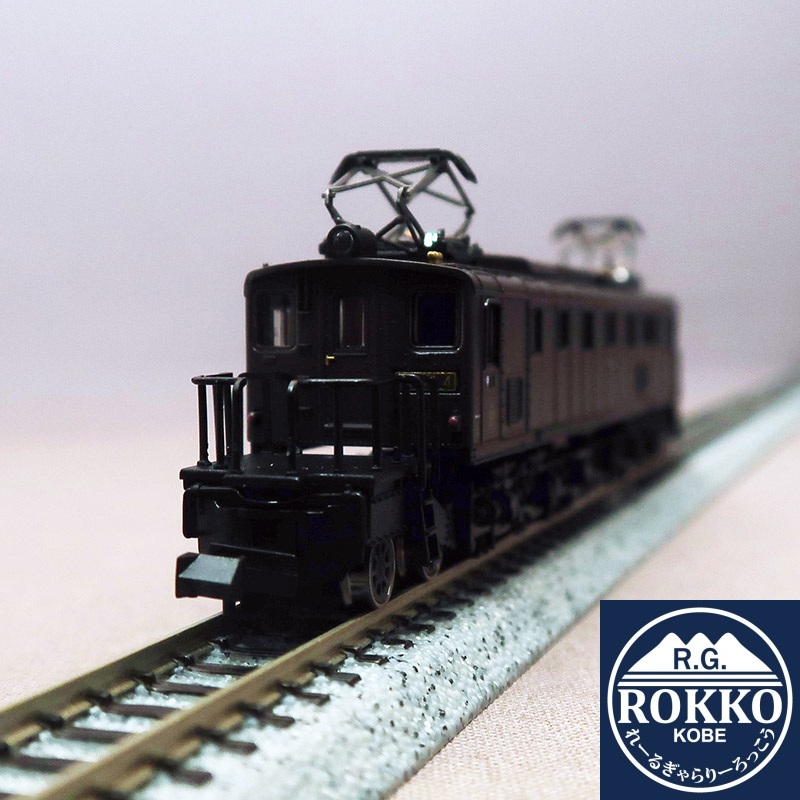
(A1002) JNR EF52-4 (Plum color No. 1/Kofu Engine Depot)
¥9,350JPY
SKU: MicroAce A1002
Package Volume: 220.00

ItemNumber A1002
JNR EF52-4 (Plum color No. 1/Kofu Engine Depot)
information
●The history of electric locomotives in Japan began in 1912 with the Class 10000, imported for use on the Usui Pass. As the electrification of flat-terrain railway lines progressed rapidly during the Taisho era, Japan relied on imports from various major powers to supply its locomotives. In 1924, the ED15—the first electric locomotive manufactured by a private Japanese company—was completed. Building on this momentum, the Ministry of Railways spearheaded the development of the EF52, the first large-scale electric locomotive designed for mainline passenger service, which debuted in 1927. The Ministry of Railways coordinated the diverse technical know-how and standards of the various manufacturers involved, helping to elevate the overall technical capabilities across the industry.
The locomotive’s core equipment was based on the unit-switch control system developed by Westinghouse, while its auxiliary systems incorporated the best features from various manufacturers—a pragmatic design approach—with the body and deck configuration following American-style design principles. Although the EF52 largely met its performance targets, it faced several challenges, including excessive weight, unreliable pantographs, and a design that attempted to serve both passenger and freight roles without fully excelling at either. These issues were addressed in the EF53, which appeared five years later and proved to be a highly successful, well-refined machine.
After serving on the Tokaido Main Line, the EF52 was reassigned to the Chuo East Line around 1949. Its performance characteristics—geared for relatively lower speeds—and its substantial weight made it well-suited for steep, graded routes. The locomotives remained in service for a long time, eventually seeing further use on the Hanwa Line.
JNR EF52-4 (Plum color No. 1/Kofu Engine Depot)
information
●The history of electric locomotives in Japan began in 1912 with the Class 10000, imported for use on the Usui Pass. As the electrification of flat-terrain railway lines progressed rapidly during the Taisho era, Japan relied on imports from various major powers to supply its locomotives. In 1924, the ED15—the first electric locomotive manufactured by a private Japanese company—was completed. Building on this momentum, the Ministry of Railways spearheaded the development of the EF52, the first large-scale electric locomotive designed for mainline passenger service, which debuted in 1927. The Ministry of Railways coordinated the diverse technical know-how and standards of the various manufacturers involved, helping to elevate the overall technical capabilities across the industry.
The locomotive’s core equipment was based on the unit-switch control system developed by Westinghouse, while its auxiliary systems incorporated the best features from various manufacturers—a pragmatic design approach—with the body and deck configuration following American-style design principles. Although the EF52 largely met its performance targets, it faced several challenges, including excessive weight, unreliable pantographs, and a design that attempted to serve both passenger and freight roles without fully excelling at either. These issues were addressed in the EF53, which appeared five years later and proved to be a highly successful, well-refined machine.
After serving on the Tokaido Main Line, the EF52 was reassigned to the Chuo East Line around 1949. Its performance characteristics—geared for relatively lower speeds—and its substantial weight made it well-suited for steep, graded routes. The locomotives remained in service for a long time, eventually seeing further use on the Hanwa Line.