
(A8909) DD50 2nd Type (Double-Header Set / No Snowplow)
¥25,110JPY
SKU: MicroAce A8909
Package Volume: 400.00

ItemNumber A8909
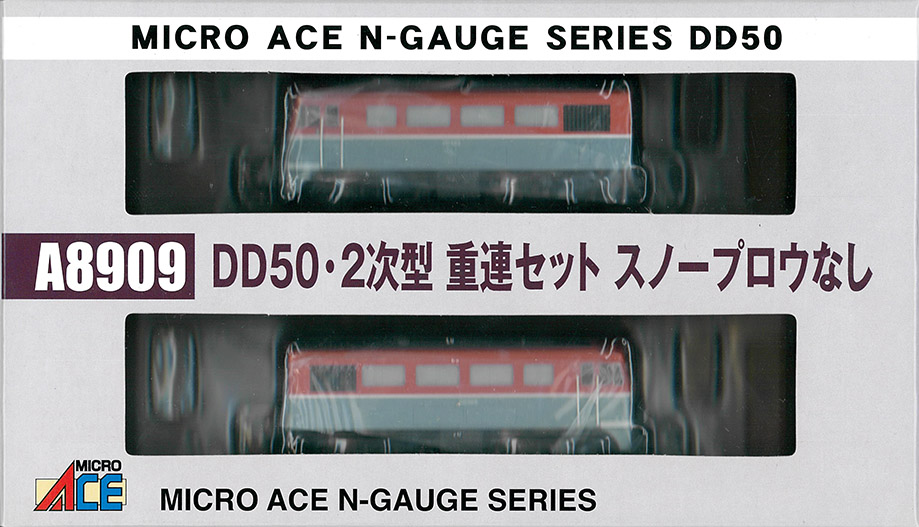
DD50 2nd Type (Double-Header Set / No Snowplow)
information
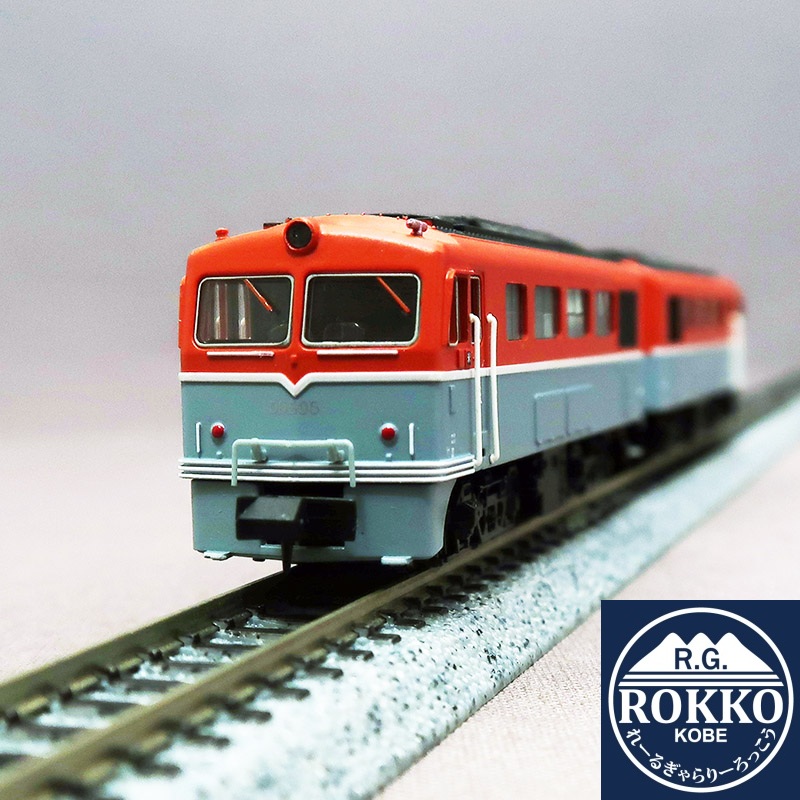
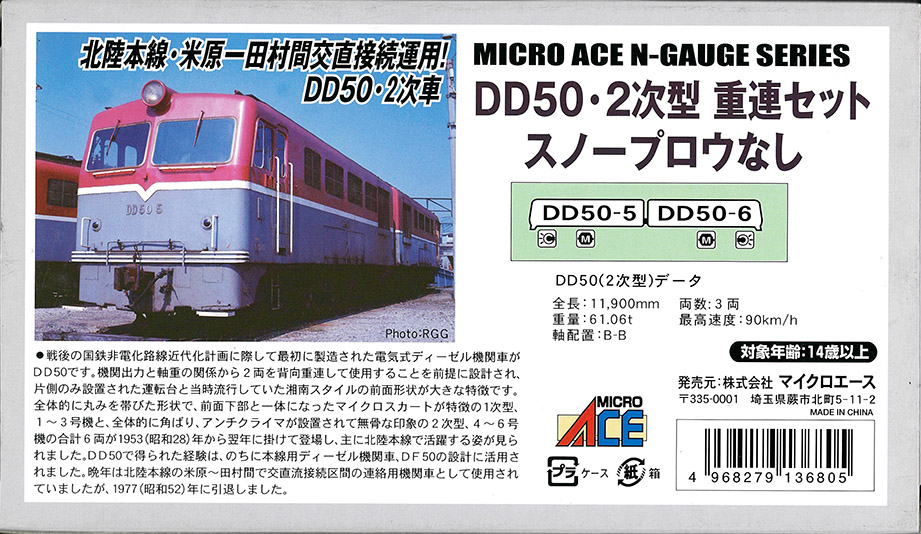
●The DD50 was the first diesel-electric locomotive manufactured under the post-war modernization plan for non-electrified Japanese National Railways lines. Designed to operate as a back-to-back coupled pair due to the balance between engine output and axle load, the locomotive is distinguished by a cab located at only one end and a "Shonan-style" front profile—a popular design trend at the time. A total of six units were introduced between 1953 and 1954: the "First Series" (Units 1–3), characterized by a rounded overall shape and a "micro-skirt" integrated into the lower front section; and the "Second Series" (Units 4–6), which had a more angular appearance and featured an anti-climber, giving them a rugged look. They were primarily active on the Hokuriku Main Line. The experience gained with the DD50 was later applied to the design of the DF50, a diesel locomotive intended for main-line service. In their later years, they served as connecting locomotives for the AC/DC transition section between Maibara and Tamura on the Hokuriku Main Line before being retired in 1977.
DD50 2nd Type (Double-Header Set / No Snowplow)
information
●The DD50 was the first diesel-electric locomotive manufactured under the post-war modernization plan for non-electrified Japanese National Railways lines. Designed to operate as a back-to-back coupled pair due to the balance between engine output and axle load, the locomotive is distinguished by a cab located at only one end and a "Shonan-style" front profile—a popular design trend at the time. A total of six units were introduced between 1953 and 1954: the "First Series" (Units 1–3), characterized by a rounded overall shape and a "micro-skirt" integrated into the lower front section; and the "Second Series" (Units 4–6), which had a more angular appearance and featured an anti-climber, giving them a rugged look. They were primarily active on the Hokuriku Main Line. The experience gained with the DD50 was later applied to the design of the DF50, a diesel locomotive intended for main-line service. In their later years, they served as connecting locomotives for the AC/DC transition section between Maibara and Tamura on the Hokuriku Main Line before being retired in 1977.