
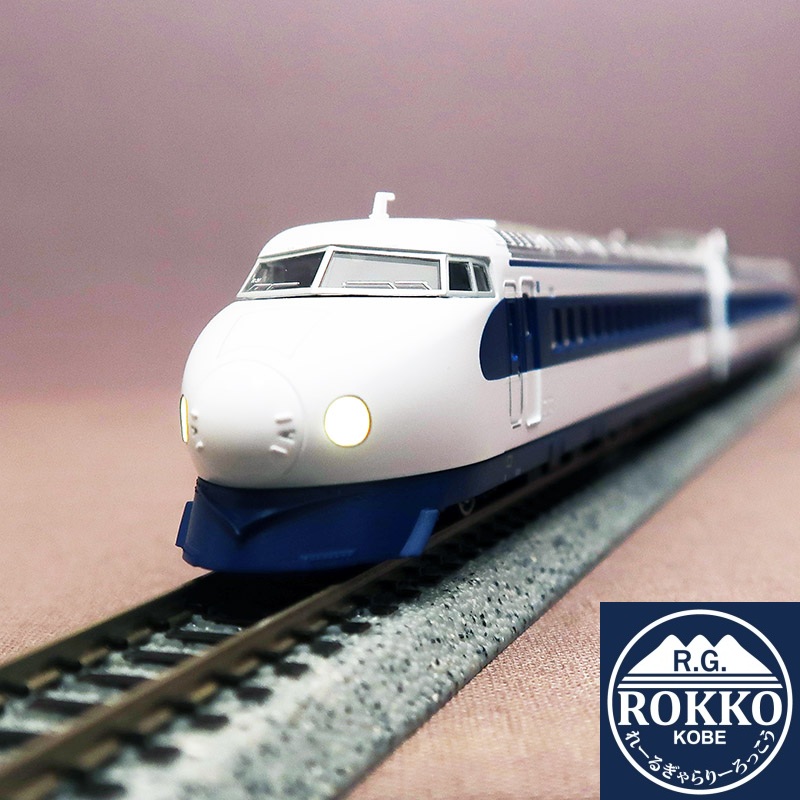
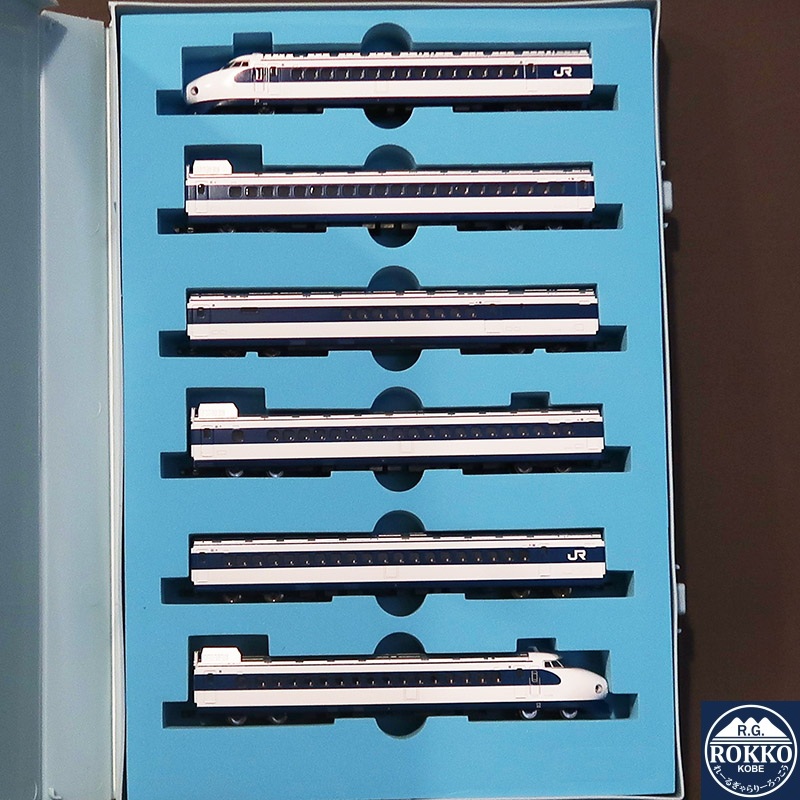
(A9654) JR 0 Series Sanyo Shinkansen (R31 formation/2003) Kodama 6 cars
¥26,350JPY
SKU: MicroAce A9654
Package Volume: 900.00

ItemNumber A9654
JR 0 Series Sanyo Shinkansen (R31 formation/2003) Kodama
6 Cars Set
information
●The 0 Series was manufactured to coincide with the 1964 opening of the Tokaido Shinkansen. Early batches—produced up to 1976—featured large side windows and were known as "large-window cars," while subsequent production shifted to the 1000 and 2000 series "small-window cars"; a total of 3,216 vehicles were built by 1986. At their peak, there were 99 of the 16-car "Hikari" trainsets, which included a dining car, a buffet car, and two Green Cars (first-class cars); however, from 1985 onwards, the introduction of the successor 100 and 300 Series led to these sets being reconfigured for "Kodama" service or scrapped, and the 16-car formations were completely phased out by 1999. Towards the end of the Japanese National Railways (JNR) era, a trial involving high-frequency "Kodama" service using shortened trainsets between Kokura and Hakata proved popular. Following the privatization of JNR, numerous 6-car "R-series" sets were formed and operated on "Kodama" and "West Hikari" services on the Sanyo Shinkansen. Various interior upgrades—such as increased seat pitch and a shift to a 2+2 seating configuration—were implemented, particularly on "West Hikari" sets; these modified trains were distinguished by a livery featuring an additional thin stripe below the main body stripe. From 1995, the base body color was changed from ivory to white—matching the 100 Series and later models—to streamline maintenance procedures, slightly altering the train's appearance. Further improvements included noise-reduction measures such as installing sound barriers beside the pantographs and changing the roof-shoulder louvers on the "sea-side" of the outbound-facing lead car (Type 21) from a vertical to a horizontal orientation, allowing the 0 Series to continue serving alongside newer models. Retirements proceeded, focusing primarily on trainsets that had not undergone interior refurbishment; in October 2003, the "R31 set"—the last to feature the original livery—was retired, marking the end of the 0 Series lineage bearing the classic JNR-style paint scheme (until the revival livery appeared in 2008). Compatible with wide-type interior lighting units (G0001/G0002/G0003/G0004); includes formation diagram and example configuration; packaged in a book-style case (carton quantity: 12); features illuminated tail lights; motorized car included.
JR 0 Series Sanyo Shinkansen (R31 formation/2003) Kodama
6 Cars Set
information
●The 0 Series was manufactured to coincide with the 1964 opening of the Tokaido Shinkansen. Early batches—produced up to 1976—featured large side windows and were known as "large-window cars," while subsequent production shifted to the 1000 and 2000 series "small-window cars"; a total of 3,216 vehicles were built by 1986. At their peak, there were 99 of the 16-car "Hikari" trainsets, which included a dining car, a buffet car, and two Green Cars (first-class cars); however, from 1985 onwards, the introduction of the successor 100 and 300 Series led to these sets being reconfigured for "Kodama" service or scrapped, and the 16-car formations were completely phased out by 1999. Towards the end of the Japanese National Railways (JNR) era, a trial involving high-frequency "Kodama" service using shortened trainsets between Kokura and Hakata proved popular. Following the privatization of JNR, numerous 6-car "R-series" sets were formed and operated on "Kodama" and "West Hikari" services on the Sanyo Shinkansen. Various interior upgrades—such as increased seat pitch and a shift to a 2+2 seating configuration—were implemented, particularly on "West Hikari" sets; these modified trains were distinguished by a livery featuring an additional thin stripe below the main body stripe. From 1995, the base body color was changed from ivory to white—matching the 100 Series and later models—to streamline maintenance procedures, slightly altering the train's appearance. Further improvements included noise-reduction measures such as installing sound barriers beside the pantographs and changing the roof-shoulder louvers on the "sea-side" of the outbound-facing lead car (Type 21) from a vertical to a horizontal orientation, allowing the 0 Series to continue serving alongside newer models. Retirements proceeded, focusing primarily on trainsets that had not undergone interior refurbishment; in October 2003, the "R31 set"—the last to feature the original livery—was retired, marking the end of the 0 Series lineage bearing the classic JNR-style paint scheme (until the revival livery appeared in 2008). Compatible with wide-type interior lighting units (G0001/G0002/G0003/G0004); includes formation diagram and example configuration; packaged in a book-style case (carton quantity: 12); features illuminated tail lights; motorized car included.