
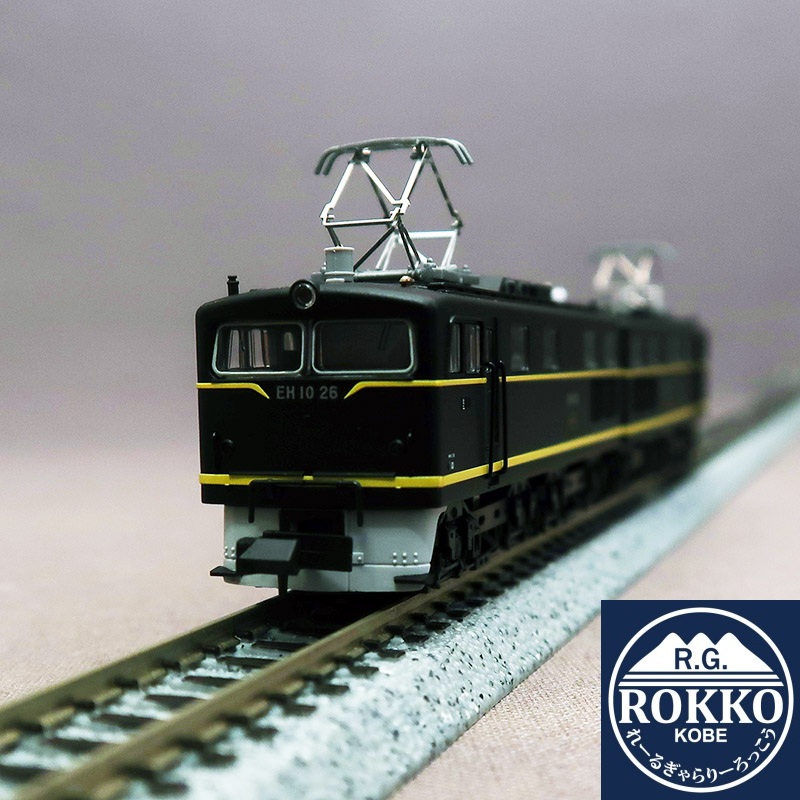
(A0825) JNR EH10-26 (Mass-produced model/Suita Second Locomotive Depot)
¥17,850JPY
SKU: MicroAce A0825
Package Volume: 220.00

ItemNumber A0825
JNR EH10-26 (Mass-produced model/Suita Second Locomotive Depot)
information
As electrification progressed on the Tokaido Main Line, electric locomotives were becoming the mainstay of freight trains. However, when the electrified section was extended to Maibara, the Japanese National Railways (JNR) determined that a single conventional locomotive would be insufficient in terms of performance to pull 1200-ton trains over Sekigahara. As a result, they proceeded with the development of the EH10, which increased the number of driving axles to eight, based on the conventional EF15. The long body, measuring over 22 meters in length, omitted the leading bogie due to the need to maintain effective length, and adopted a structure in which two bodies with four driving axles each were coupled together to improve curve negotiation performance. The non-through, box-type body with crew doors on the sides became the standard form for later JNR electric locomotives, and one pantograph was installed on each car. Boasting a rated output of 2600kW with eight MT43 type motors, its massive 116-ton body and jet-black style with yellow stripes earned it the nickname "Mammoth" among fans. After four prototypes appeared in 1954, 60 mass-produced units were produced by 1957, featuring changes such as altered pantograph placement and weight reduction in various parts. A total of 64 units were in service on the Tokaido and Sanyo Main Lines east of Okayama. Due to their unsuitability for hauling high-speed container trains and the difficulty of double-heading with other F-class locomotives, they were withdrawn from frontline service following the introduction of the successor EF66. As they were also difficult to repurpose for local lines, all units were eventually retired by 1981.
JNR EH10-26 (Mass-produced model/Suita Second Locomotive Depot)
information
As electrification progressed on the Tokaido Main Line, electric locomotives were becoming the mainstay of freight trains. However, when the electrified section was extended to Maibara, the Japanese National Railways (JNR) determined that a single conventional locomotive would be insufficient in terms of performance to pull 1200-ton trains over Sekigahara. As a result, they proceeded with the development of the EH10, which increased the number of driving axles to eight, based on the conventional EF15. The long body, measuring over 22 meters in length, omitted the leading bogie due to the need to maintain effective length, and adopted a structure in which two bodies with four driving axles each were coupled together to improve curve negotiation performance. The non-through, box-type body with crew doors on the sides became the standard form for later JNR electric locomotives, and one pantograph was installed on each car. Boasting a rated output of 2600kW with eight MT43 type motors, its massive 116-ton body and jet-black style with yellow stripes earned it the nickname "Mammoth" among fans. After four prototypes appeared in 1954, 60 mass-produced units were produced by 1957, featuring changes such as altered pantograph placement and weight reduction in various parts. A total of 64 units were in service on the Tokaido and Sanyo Main Lines east of Okayama. Due to their unsuitability for hauling high-speed container trains and the difficulty of double-heading with other F-class locomotives, they were withdrawn from frontline service following the introduction of the successor EF66. As they were also difficult to repurpose for local lines, all units were eventually retired by 1981.