
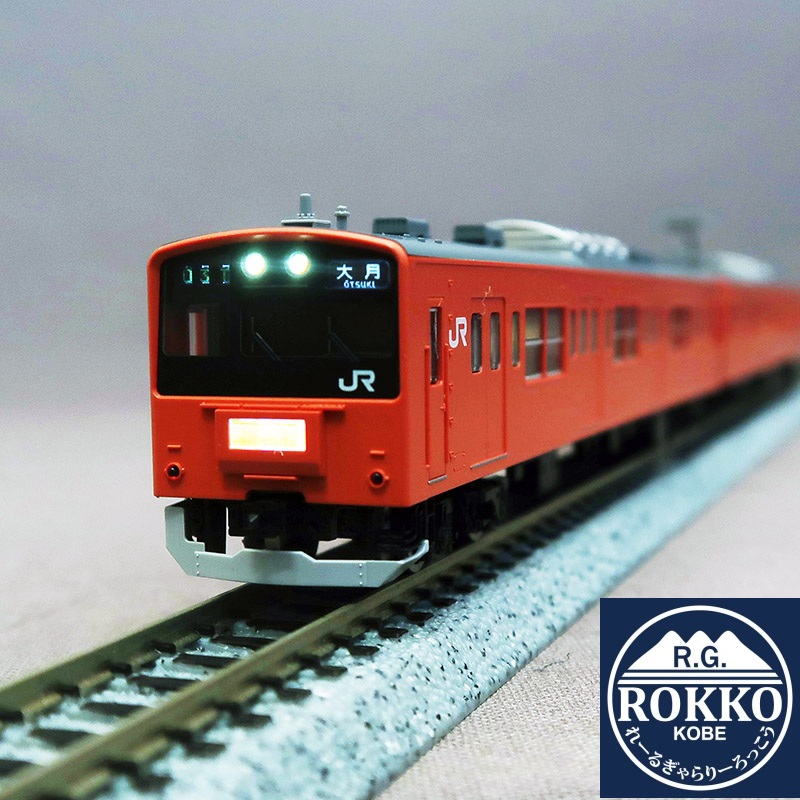
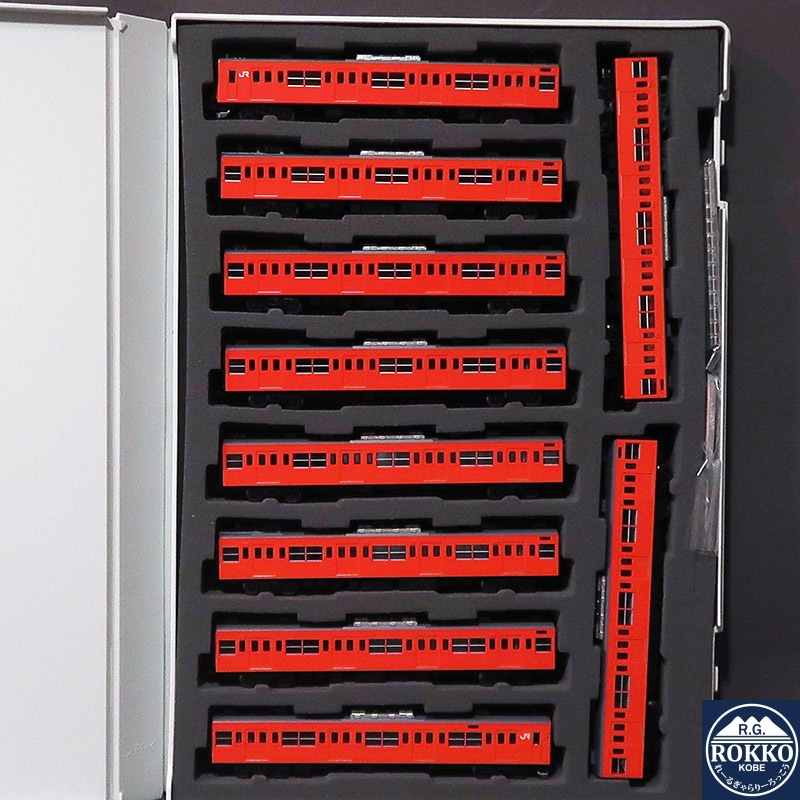
(98862) JR 201 series Chuo Line (through formation) 10 Cars
¥27,840JPY
SKU: TOMIX 98862
Package Volume: 1000.00
Related Category

ItemNumber 98862
JR 201 series Chuo Line (through formation)
10 Cars Set
information
●The 201 series is a commuter train that debuted as the first armature chopper-controlled train of the Japanese National Railways (JNR) in 1979. After its energy-saving effects were demonstrated, mass production began in 1981.
The 201 series was initially deployed to replace the 101 and 103 series on the Chuo Line. Due to operational requirements on the line, two types of formations were introduced: a 4-car + 6-car split formation and a 10-car through formation.
The last 101 series train was retired in 1985, completing the conversion to the 201 series.
After privatization in 1993, modifications were made to the trains, including the addition of skirts and electric destination indicators on the front, significantly changing the appearance of the front end compared to previous 201 series trains.
From 2000, the pantographs on the 10-car fixed formations were replaced with single-arm PS35C pantographs as a measure against snowfall.
From 2005, replacement with the successor E233 series began, with the 10-car through formations being retired in 2008 and the split formations by 2010.
In its later years, the 10-car through-train formation was used not only on the Chuo Line (between Tokyo and Otsuki) but also on the Ome Line (between Tachikawa and Ome).
JR 201 series Chuo Line (through formation)
10 Cars Set
information
●The 201 series is a commuter train that debuted as the first armature chopper-controlled train of the Japanese National Railways (JNR) in 1979. After its energy-saving effects were demonstrated, mass production began in 1981.
The 201 series was initially deployed to replace the 101 and 103 series on the Chuo Line. Due to operational requirements on the line, two types of formations were introduced: a 4-car + 6-car split formation and a 10-car through formation.
The last 101 series train was retired in 1985, completing the conversion to the 201 series.
After privatization in 1993, modifications were made to the trains, including the addition of skirts and electric destination indicators on the front, significantly changing the appearance of the front end compared to previous 201 series trains.
From 2000, the pantographs on the 10-car fixed formations were replaced with single-arm PS35C pantographs as a measure against snowfall.
From 2005, replacement with the successor E233 series began, with the 10-car through formations being retired in 2008 and the split formations by 2010.
In its later years, the 10-car through-train formation was used not only on the Chuo Line (between Tokyo and Otsuki) but also on the Ome Line (between Tachikawa and Ome).