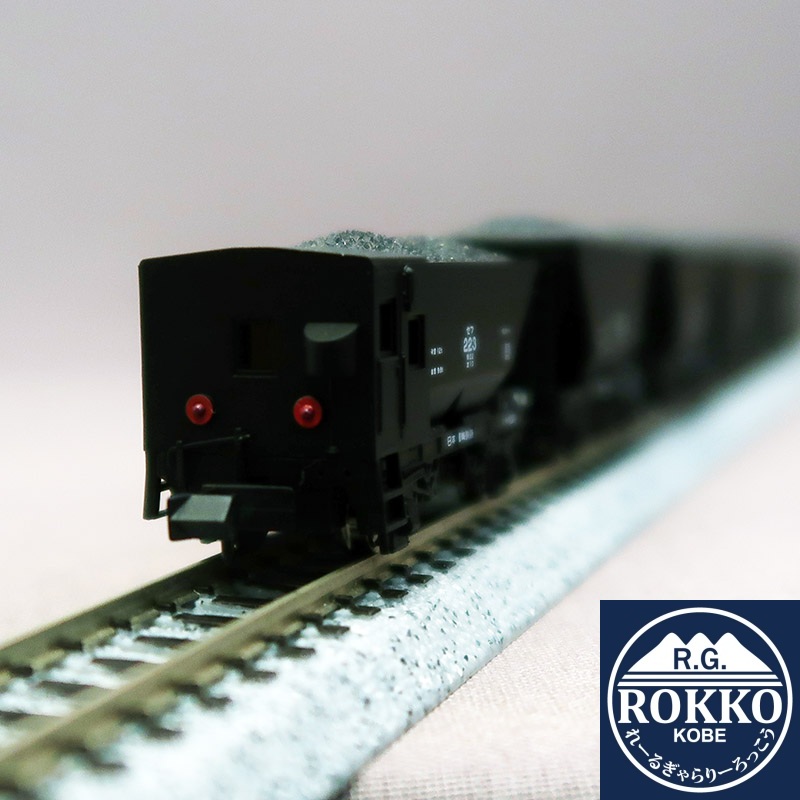
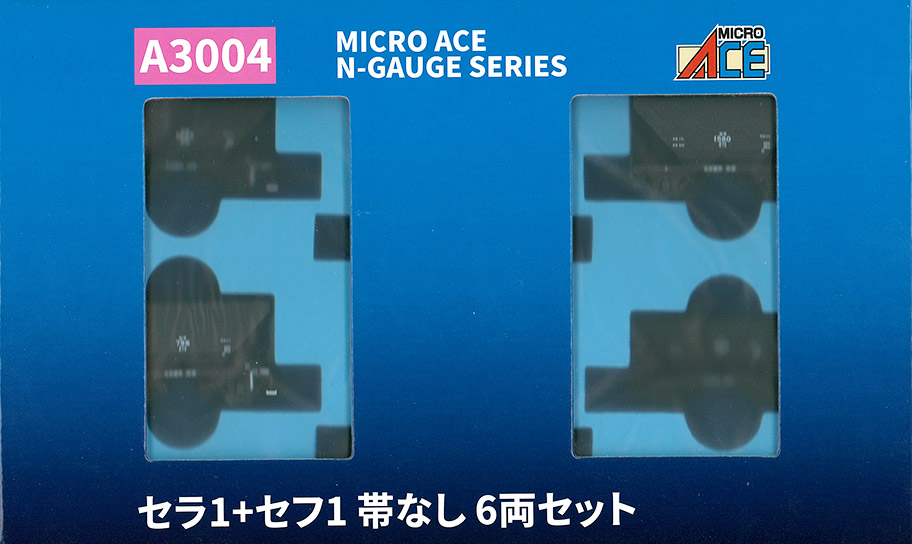
(A3004) JNR Sera 1 + Sefu 1 (without stripe) 6 cars
¥11,050JPY
SKU: MicroAce A3004
Package Volume: 400.00

ItemNumber A3004
JNR Sera 1 + Sefu 1 (without stripe)
6 cars set
information
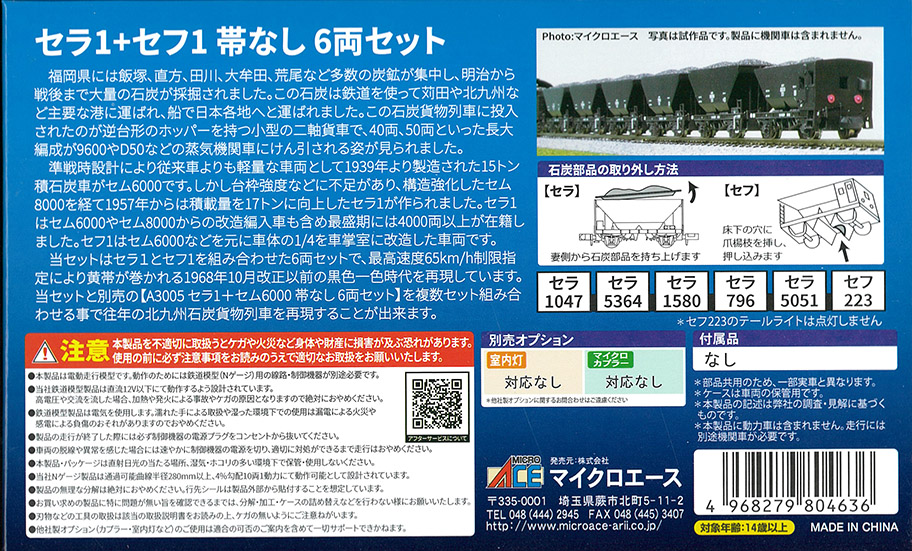
Fukuoka Prefecture had a large concentration of coal mines, including Iizuka, Nogata, Tagawa, Omuta, and Arao, and large quantities of coal were mined there from the Meiji era until after World War II. This coal was transported by rail to major ports such as Kanda and Kitakyushu, and then shipped to various parts of Japan. The small, two-axle freight cars with inverted trapezoidal hoppers were used for these coal freight trains, and long formations of 20 or 30 cars were seen being pulled by steam locomotives such as the 9600 and D50. The Sem 6000 was a 15-ton coal car manufactured from 1939 as a lighter vehicle than conventional cars due to its semi-wartime design. However, it had shortcomings in frame strength, and after the structurally reinforced Sem 8000, the Sera 1, which increased the carrying capacity to 17 tons, was produced from 1957. At its peak, there were more than 4,000 Sera 1s in service, including converted Sem 6000 and Sem 8000 cars. The Sefu 1 was a vehicle based on the Semu 6000 and others, with one-quarter of the car body converted into a conductor's compartment. In this way, Kyushu's coal industry, which supported Japan's modern development, began to decline around the 1960s due to a decrease in mining volume, the influx of coal from overseas, and the shift to oil as an energy source. All Semu 6000 cars were retired in 1979, Sera 1 cars in 1986, and Sefu 1 cars in 1985.
JNR Sera 1 + Sefu 1 (without stripe)
6 cars set
information
Fukuoka Prefecture had a large concentration of coal mines, including Iizuka, Nogata, Tagawa, Omuta, and Arao, and large quantities of coal were mined there from the Meiji era until after World War II. This coal was transported by rail to major ports such as Kanda and Kitakyushu, and then shipped to various parts of Japan. The small, two-axle freight cars with inverted trapezoidal hoppers were used for these coal freight trains, and long formations of 20 or 30 cars were seen being pulled by steam locomotives such as the 9600 and D50. The Sem 6000 was a 15-ton coal car manufactured from 1939 as a lighter vehicle than conventional cars due to its semi-wartime design. However, it had shortcomings in frame strength, and after the structurally reinforced Sem 8000, the Sera 1, which increased the carrying capacity to 17 tons, was produced from 1957. At its peak, there were more than 4,000 Sera 1s in service, including converted Sem 6000 and Sem 8000 cars. The Sefu 1 was a vehicle based on the Semu 6000 and others, with one-quarter of the car body converted into a conductor's compartment. In this way, Kyushu's coal industry, which supported Japan's modern development, began to decline around the 1960s due to a decrease in mining volume, the influx of coal from overseas, and the shift to oil as an energy source. All Semu 6000 cars were retired in 1979, Sera 1 cars in 1986, and Sefu 1 cars in 1985.